Blacksmithing
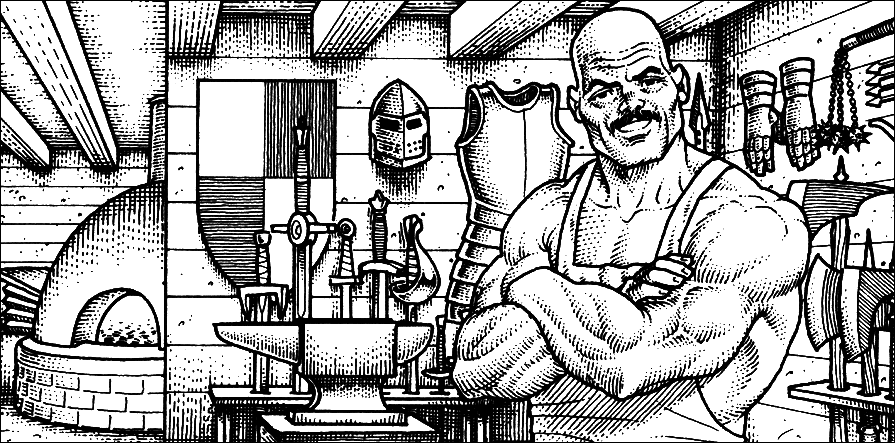
Blacksmiths are able to craft remarkable items from the various metals found in Britannia's mines. In addition to Iron, a skilled Blacksmith can also work with alloys, including Bronze and Shadow Iron.
Tools of the Trade
Smith's Hammer, Tongs, Sledgehammer: Primary tools of the Blacksmith. Using them near an anvil and forge opens the Blacksmithing crafting menu. Can be used to repair metal weapons and armor.


- Anvil and Forge: Blacksmithing requires access to an anvil and forge, found in most blacksmith shops.
- Dishing Stump: Crafting shields requires proximity to a dishing stump, which can be found in most blacksmith shops.

Blacksmiths can no longer select the material via the crafting menu. Instead each Blacksmithing Tool can be set to craft items of a particular Ingot type. Each tool can be calibrated from a drop down menu. Each type has its own Crafting Menu.
Metals
Iron: Iron is the strongest metal in Britannia, and thus is the preferred medium for weapons and armor. Armor created from Iron is sturdier (if somewhat heavier) than that of other metals, and provides better protection. It is likewise cumbersome, and wearers of iron armor suffer a dexterity penalty. Armor made of iron is 50% meddable.
Bronze: Bronze ingots are made by smelting Copper ingots and Tin ingots together (using the Alloy section in the Blacksmith Crafting menu). Bronze armor is slightly lighter than iron armor, though it is not quite as sturdy, does not afford quite the same protection. Thus, Bronze armor is generally limited to showy occasion such as festivals and banquets, or to the more vain among the martial Professions. The honorable, if sometimes ostentatious, Paladins of Trinsic are most notable for incorporating Bronze armor into their arsenal. Armor made from Bronze is fully meddable. Fashioning weapons of bronze has long fallen out of fashion in favor of superior iron based weapons.
Shadow Iron: Shadow Iron is a dark gray alloy created by smelting regular Iron ingots with Blackrock ingots (using the Alloy section in the Blacksmith Crafting menu). The resulting armor is lighter than iron or bronze. It is likewise as sturdy as bronze, but affords the least protection of all the metals. Blackrock is naturally resistant to magic, and each piece of Shadow armor worn offers an increase to Resisting Spells. Due to its magic negating properties, shadow iron armor is the only non medable armor, meaning that the meditation skill, used to regenerate mana, will not work while wearing pieces of shadow iron armor. Armor made of shadow iron is non meddable. Due to its unwieldy nature, powerful magic is required to fashion shadow iron into usable weapons. Though the secrets of the technique and spells required to do so has been lost, it is rumored that ancient weapons still exist.
Imbuing
- Tool: Blacksmith's Runic Tools, purchased from the Blacksmiths, NPCGuild Officers and NPCGuildMasters. (100 charges).
- Powders: Powder of Protection Enhancing Powder (Diamonds), Accuracy Enhancing (Emeralds), Damage Enhancing (Rubies), Durability Enhancing (Sapphires)

Slayer Elixirs: Silver, Fiendfeller, Daemonbane, Elemental Ban, Scale Cleaver, Kinslayer, Broodslayer, Blightbane, Cogbreaker, Clockwork
Used On: Protection, Accuracy and Damage Enhancing powders can be used on player crafted Blacksmithing Weapons and Armor. Durability Enhancing Powder may be used on non player crafted Blacksmithing weapons and Armor, including magical Weapons and Armor, and provides a one time increase of 40 points to the items current hit points and maximum durability.
Associated Guild
- Blacksmith's Guild
- The Consortium
- The Artificer's Guild
From the Paths of Virtue wiki by Archaaz.
Thanks! That helps us keep this page right.
Comments 0
Comments may be moderated by the team before they are shown.
Sign in to add a comment.
Thanks! Your comment shows here once the team has read it.